
The Difference Between Neuroscience and Learning Science
And why it matters!


Photo by Alexander Grey on Unsplash
A recent call for expert quotes on the site Qwoted read:
“Neuroscience expert input needed on how neuroscience helps leaders”.
The request continued:
“I am reporting on how neuroscience can help leaders in a business setting, particularly when it comes to organizational change.”
And then some questions, including:
o “How does neuroscience help leaders?”
o “How will neuroscience recognize and reduce employee stress?”
o “How does neuroscience work with employees asking for feedback in the workplace environment?”
Likely, the reporter received valuable insights into best practices for giving positive and critical feedback; stress-reducing tips and strategies (e.g., improving time-management, communication, taking regular breaks, setting clear expectations etc.), as well as other activities that have been shown to help leaders better cope with organizational change.
I don’t doubt that the responses were useful. But were any of them actually providing evidence of how neuroscience helps leaders? Or, is the advice this reporter probably received really based on a different science altogether?
Let’s back up a little and consider the world of “learning myths”.
Learning Myths
The field of education has its fair share of learning myths. For example, beliefs that:
People have different learning styles
Our intelligence is fixed at birth
We use only 10% of our brains (which always reminds me of the part in the movie Wedding Crashers where Owen Wilson says: "You know how they say we only use 10 percent of our brains? I think we only use 10 percent of our hearts"💗)
Listening to classical music makes you smarter
Some people are right-brained and some are left-brained and this leads to certain personality traits or talents
The early years of child development are significantly more important for learning than any other period
All the above statements are pervasive myths about learning that might sound cool, interesting, plausible or reasonable (or perhaps all of the above), but none are grounded whatsoever in any evidence about how people actually learn.
The Neuro-myth
One of the stickiest learning myths is thinking that something with neuro or brain in front of it is grounded in serious science and is thus, by definition, “high-quality”. And in some ways, it makes sense—neuro-anything sounds scientific, cutting-edge, smart, and robust.
If a product or instructional approach claims to be “brain-based” or “grounded in neuroscience”, there’s a baked-in assumption of rigor or quality.
This can lead us to uncritically accept any explanation or description including neuroscience information, even when the neuroscience presented does not support the logic of the explanation.
A somewhat nuanced challenge in all of this is that a claim or statement being made in the marketing copy of a product might be true, but it doesn’t translate to other contexts.
🧪Consider an example from biology.
Scientists know that chemicals known as antioxidants—such as vitamin C and vitamin E, can, in test tubes at least, halt oxidative reactions that are harmful to living cells. These oxidative reactions, caused by “free radicals,” have been suspected as causing some of the age-related accumulation of damage to cells and tissues.
This all is true.
It’s not much of a logical leap to imagine that supplementing antioxidants should reduce free radical damage and, consequently slow down aging and prolong lifespan. In fact, many researchers and marketers have latched on to this line of thinking to sell vitamin supplements and other, more exotic-sounding (read: “expensive”) synthetic supplements.
A large body of research—hundreds of studies—however, have found no evidence that supplementation with antioxidant vitamins or other chemicals prolongs life in laboratory animals (or humans). The reasons for these (admittedly disappointing) results are varied and not fully understood.
But the conclusion remains.
In the commercial educational world, claims such as “our educational games give your brain a workout” or “train your brain”, abound. Products claim to improve memory, stave off Alzheimer’s, or boost one’s problem-solving capabilities.
For example, the popular “brain training” company Lumosity claimed that its online games can:
“help users perform better at work and in school, and stave off cognitive deficits associated with serious diseases such as Alzheimer’s, traumatic brain injury, and post-traumatic stress.”
Following an investigation by the Federal Trade Commission (FTC), however, the company was ordered to pay a $2 million settlement for making false marketing claims.
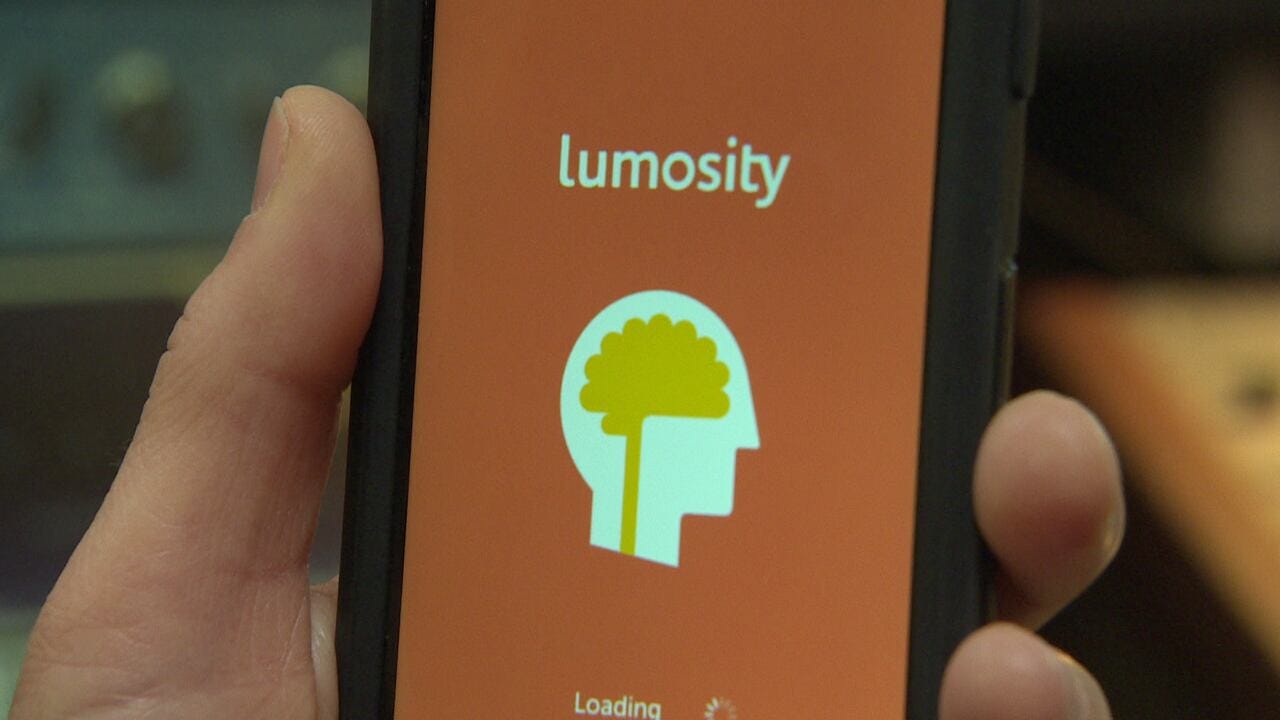
The FTC ruled that Lumosity lacked adequate scientific evidence for their claims. The reviews of the literature essentially found that playing these games made people better at…playing these games (or similar tasks). There is, however, no evidence that the training with the online brain games transfers to any real-world setting or that it confers the benefits touted by the company.
By translating, or interpreting research findings in ways that aren’t correct or that are only tangentially related to stated claims, brain gaming companies blur the distinction between improvements on specific tasks or games, and increase in overall cognitive ability. This can lead users to think that getting better at a specific game will positively impact their cognitive abilities and competence in everyday life.
Which just isn’t true.
What Neuroscience CAN Tell Us
The truth is, findings in neuroscience are, for the most part, based on molecular and cellular studies.
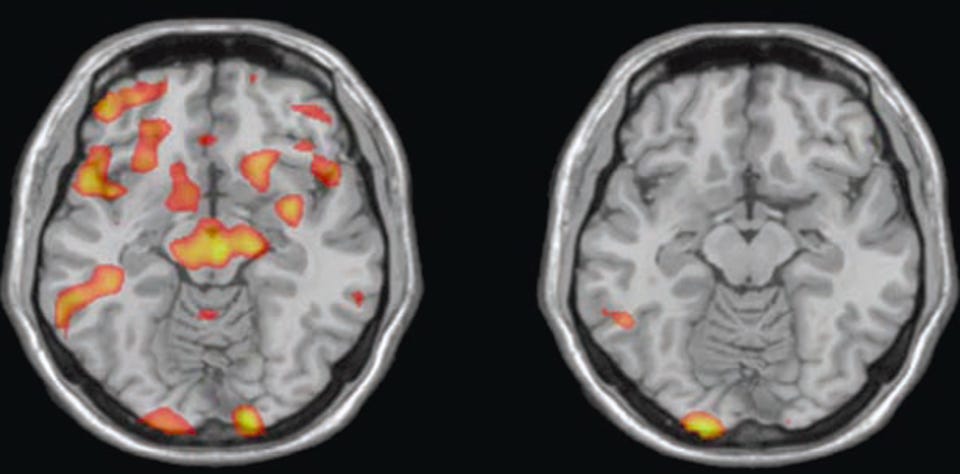
Neuroscience is a multidisciplinary domain focused on understanding the structure, function, and development of the nervous system, with a primary focus on the brain. It helps us understand the basic building blocks of the nervous system, how they work together, and how the structures communicate and behave.
Neuroscience research uses tools such as functional magnetic resonance imagining (fMRI) and PET scans to identify brain activity by identifying changes in blood flow in particular regions. For example, fMRI scans can be used to compare dyslexic brains and typical brains while people are reading and then measure how the scans change (or don’t) following treatment or intervention.
Neuroscience has also shown that the brain is capable of producing new brain cells (neurogenesis) many of which will eventually die unless we engage in some type of effortful learning. This is because certain pathways in the brain that are used are maintained, those that aren’t are eliminated. This is a prime example of “use it or lose it.”
Interesting and important?
✅ Yes! and
✅ Yes!
But neuroscience research evidence tends to be more academic—geared toward identifying fundamental processes, rather than the impacts of interventions on human behaviors under natural conditions.
Neuroscience research does not directly drive learning interventions or other applications. Put another way, recognizing that new brain cells will die if they don’t engage in effortful learning is useful information—but it does not, in and of itself, practically inform specific techniques or strategies for learning.
As Will Thalheimer wrote:
“As we learn more about how the brain works and link brain function with practical learning situations, we may uncover unique insights. But today, neuroscience has nothing to tell us about learning design and delivery.”
The authors of Urban Myths About Learning and Education concur, saying:
“For the time being, we do not really understand all that much about the brain... More importantly, it is difficult to generalize what we do know into a set of concrete precepts of behavior, never mind devise methods of influencing that behavior.”
The Risk of the Neuro-label
At this point, you might be asking:
Isn’t this just hair-splitting?
Is it really risky or damaging to keep the neuro-myth alive?
Does it really matter if people believe that a learning product or approach claiming to be based on neuroscience is better?
Yes, I would argue. It does matter!
Neuroscience and learning science complement and relate to each other, but are very different endeavors.
Foundational principles vs. translational strategies
Suppose you are a mechanical engineer and you want to build a bridge. What must you know?
You must understand the fundamental principles of physics, for example the definition of a force and how forces act on a body or structure in a given situation. But while knowledge of those principles is necessary and useful, it does not actually tell the engineer how to build the bridge. Engineering is the application of those principles to create effective solutions in the building of structures.
Similarly, a learning engineer may want to develop an efficient training program for employees of a firm. Or a pedagogical framework for effectively teaching complex skills and ideas to new students in a graduate or professional school. These challenges involve learning, memory, and understanding the complex ways humans develop expertise.
Much as physics informs the work of mechanical engineers without doing that work, findings from neuroscience inform the work of learning engineers, without doing that work.
Learning science can be thought of as the application of evidence from neuroscience (amongst other disciplines) to create effective solutions relating to learning: from acquiring knowledge to developing mastery and the ability to transfer these skills to novel problems.
Understanding this can help us improve educational efforts and reduce the likelihood of being taken advantage of, or drawing incorrect conclusions that distort the reality of research findings.
Why This Matters
As learning professionals, we need to think like scientists. Which means considering the available evidence and tailoring our instructional practices accordingly.
And here’s why:
Basing our instructional decisions and approaches on sketchy neuroscience claims is an opportunity lost to implement practices that do have solid scientific support.
When we take time and effort to implement a strategy based on a learning myth, we are spending valuable resources that could be better spent elsewhere.
Misconceptions and myths about learning can impede education reform efforts at many levels. If a large percentage of people cling to beliefs on the benefits of a neuro-label, they are less likely to support or engage with potentially effective, evidence-based initiatives that don’t have it.
If we focus only on neuroscience-based information and claims, we are likely ignoring the impact of other factors on real-world learning.
Perhaps most importantly, if we are so focused on “changing our brain” we are likely ignoring the behavioral elements—or the impact of other factors on learning.

For example: We know that spending a certain amount of time focused on a learning task is good and that after that, we need to take a break and then revisit. This all has to do with the brain and the benefits of forgetting a little and then retrieving information.
As research by Robert Bjork (and others) shows, retrieval keeps strengthening the memory trace in our brains making it more permanent. But, when we look at things from the learning science angle, we realize it’s equally important to considering WHAT is it that people are doing in the time they are meant to be learning?
Time on task is not, in and of itself good or bad, it depends on the quality of what we are doing during that time. Learning science can help us think more strategically about how we design and implement learning experiences. If we fixate on some research that tells us that spending X amount of time learning and then taking a break is optimal, we may not end up with a good result.
Because what we actually spent time on was not the right thing!
Learning Science
Evidence from learning science allows us to think strategically about how we design and implement learning experiences and help people develop expertise. To do so, we need to engage in what learning science calls deliberate practice.
This involves:
Not simply repeating that which you already know how to do.
Engaging in meaningful tasks which grow in variety and complexity over time and focus on reaching beyond the current level of performance (and the motivation to do so).
Coaches (i.e., experts of some kind) who help identify weaknesses, provide feedback, find specific tasks to address those deficiencies, and keep learner perception and judgement accurate.
Time for forgetting and opportunities for retrieval.
While neuroscience might be able to inform some aspects of these strategies, is not contributing to these design efforts in a direct way.
The Way Forward

Respecting evidence is a good thing and there is an opportunity to make sure we aren’t misusing neuroscience evidence (such as cool-looking brain imaging studies), or drawing conclusions that go beyond what data actually show us. Because making learning design or product adoption decisions based on wrong assumptions or conclusions leads to wasted time, effort, and money—not to mention the impact on learning outcomes.
To counteract this, as learning professionals we can:
Be aware of overgeneralizing research findings or drawing conclusions that go beyond what the data show.
Be careful not to confuse descriptive research findings and models with prescriptive ones.
Approach anything described as neuroscience-based (or even research-based for that matter) with a healthy level of skepticism.
Play our part in respectfully debunking learning myths and misconceptions and in doing so share and socialize what the evidence does show.
Keep learning. As the learning science field evolves, so will knowledge, tools, and willingness to challenge outdated assumptions.
When we base decisions on how learning happens (rather than intuition, fads, preferences, or flashy marketing), we are better able to:
Choose and implement the most effective techniques for meaningful learning
Use appropriate educational technologies and tools thoughtfully
Make smarter more effective use of time, effort, and resources
Advance our profession by upholding a standard of intellectual honesty and practical rigor
Remain open to evidence that:
calls into question existing beliefs
allows us to recognize gaps in our knowledge
ultimately serves our goal of promoting long-term meaningful learning for all learners
Neuroscience may sound cooler (or sexier) than learning science or cognitive psychology and come with colorful brain scans, but when it comes to improving learning experiences and outcomes, sounding smart isn’t our goal.
Being effective is.
This piece is based on an article I published in TD Magazine: Science and the Brain: The key differences between neuroscience and learning science—and why it matters to L&D practitioners. February, 2026.
Reckon that’s why ATD asked me to write a book on myths (yep, NeuroX was one), and then one on learning science, where I said much like this (more tersely; I’m not as eloquent) as preface. Thanks for helping clear the air!
Reading this piece, I feel like “finally, someone explained the truth.” I work in education research, and you are right that putting the word “neuro” in front of a product one is trying to sell gives it a sheen of authenticity that is rarely earned. Neuroscience has come a long way in my lifetime, but the principles of effective learning that are most generalizable are, I agree, those you state. Because we know more now about neuroplasticity through the lifespan, we better understand why retrieval practice and deliberate practice work so well, but those particular insights principally came from observational and experimental cognitive psychology (and, to an extent, from common sense. We get better at things we do a lot, especially if we gradually ramp up the difficulty and learn from our mistakes).