
The Path to Real Learning is Not the Quickest

My husband Jay teaches life science at UCLA.
He teaches life science to non-majors students, a population he likes for many reasons. One of which is non-majors are a group of students who are not likely to take a whole series of science classes.
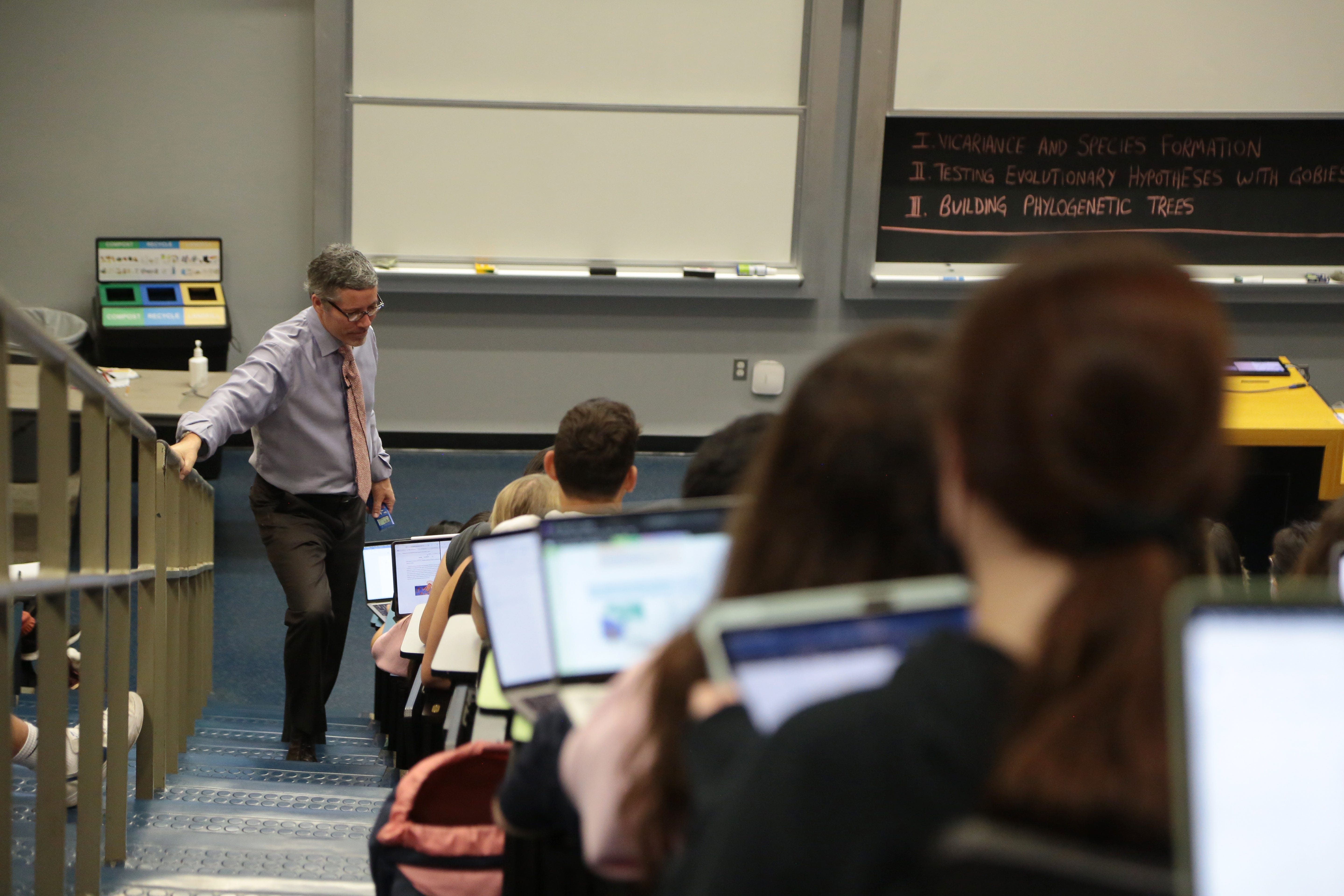
They typically need to take a science course to fill a prerequisite requirement of some kind, and his course satisfies that need. As such, he has the a brief (and important) opportunity to influence and inspire a group of students who one day will be out in the world as teachers, lawyers, architects, accountants, managers, writers, consumers, parents, spouses…
Jay writes in his syllabus:
Science touches our lives every day. Its increasing relevance is clear in a multitude of areas, including modern genetics & biotechnology, nutrition & health, and brain functioning & behavior. Maybe you’ve pondered questions such as these:
Is eyewitness testimony in courts always accurate?
Why are humans among the only species to have friendships?
Does sunscreen use reduce skin cancer risk? How do we know that’s true?
Do vitamin supplements reduce the likelihood of getting sick?
What are taste preferences? Why do they exist?
What is “blood doping?” How does it improve athletic performance?
How does caffeine (and other drugs) work?
Why doesn’t evolution lead to the production of perfect organisms?
What are emotions? Why are they less permanent than they feel?
In Life Science 15, we explore these topics and many others. We’ll go beyond the facts as we dissect the process of scientific thinking. We will see that it is an intellectual activity, encompassing observation, experimentation, and explanations of natural phenomena. And, more importantly, it is a practical pathway to discover and better understand our world.
Jay wants his students to recognize ways that they can use evidence to guide everyday decision-making in their own lives and begin to appreciate that biology is about them and touches every aspect of their life.
They don’t need to be headed to medical school to get a foundational understanding of science and scientific thinking which will ultimately make them better consumers of scientific information.
And, perhaps most importantly, he wants them to see that biology can be creative and fun!
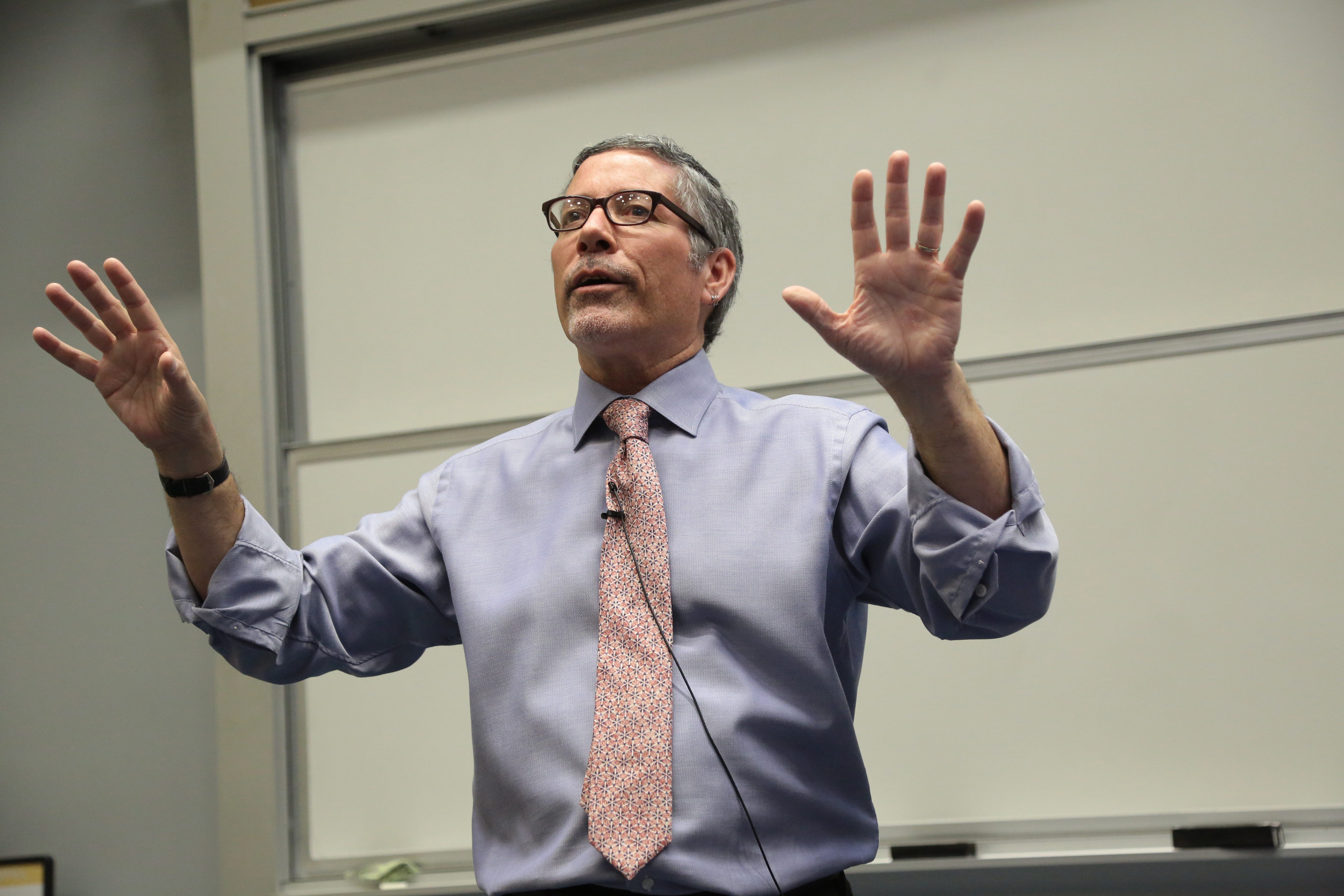
Students are often looking for ways to get some extra points to perhaps offset a low quiz score or simply boost their grade in any way they can! To this end, on top of his other assignments Jay provides his students with an extra-credit opportunity. One which typically about 2/3 of his students take advantage of.
The opportunity is described on this syllabus like this:
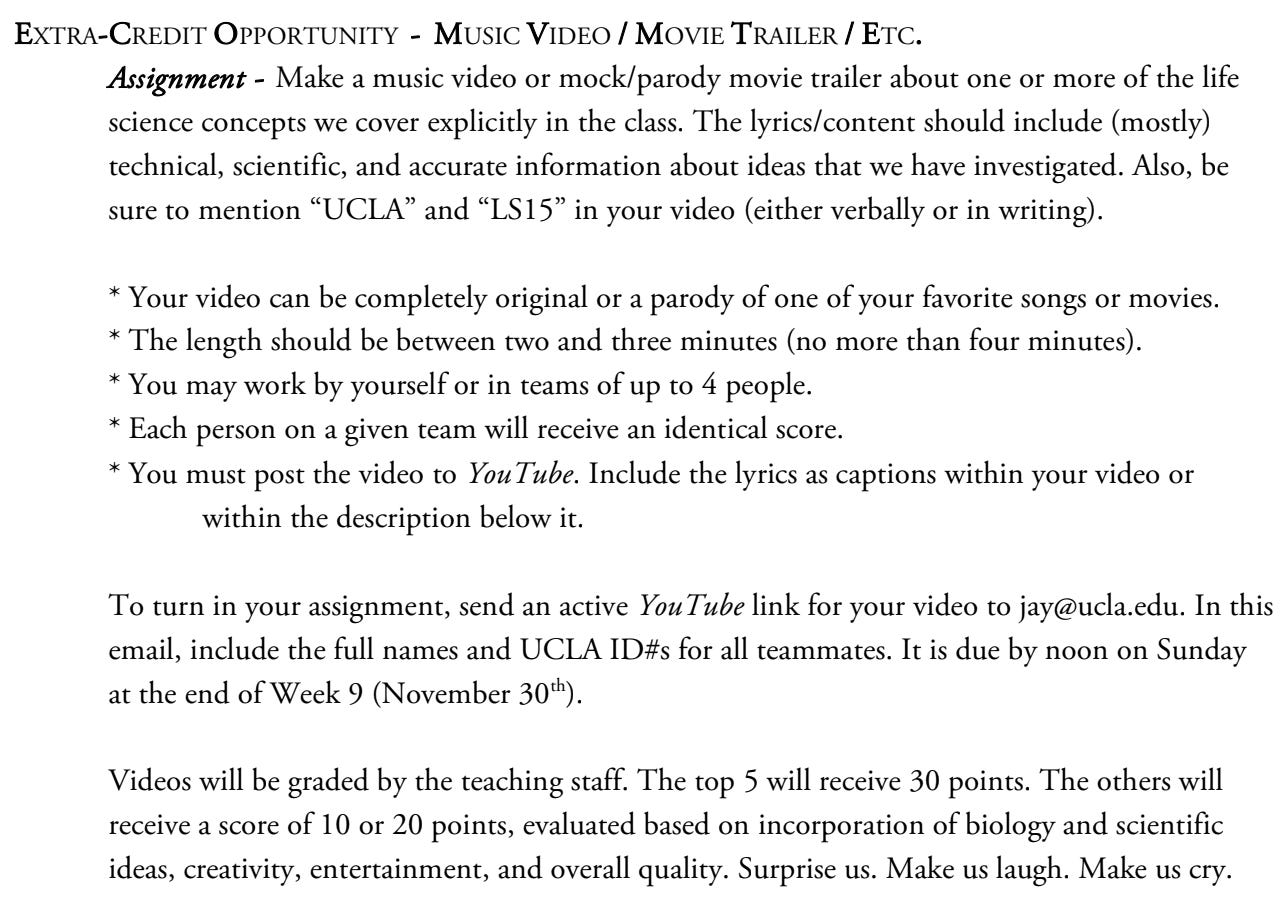
The idea is that the students will synthesize and summarize what they’re learning and create a video that creatively conveys important concepts learned in the class.
Some focus on one main concept, others synthesize multiple course concepts. And most collaborate with others in the class.
The assignment encompasses so many of the features of optimal learning experiences that can help students make truly make meaning of new information:
Students have opportunities for collaborative interactions and many submit group projects.
Students have the opportunity to make choices in what they create and exercise their creativity within a science course (something not always done).
Students engage in elaboration in which they take concepts from the course and compare them, connect them to their own life, explain and describe different, and draw analogies.
As they plan and write their scripts, they organize their thinking, grouping and connecting things in meaningful ways.
They generate summaries and descriptions and explain course concepts in their own words.
This also involves synthesizing concepts across the course and explicitly describing connections between them.
One of the first videos Jay received when he started offering this assignment is here. I watch it frequently. If you have ever taken Jay’s course, or read his book Mean Genes, you’ll know that this young lady absolutely NAILED this assignment!
A post yesterday from Paul Matthews got me thinking again about assignments like these. And the purpose they serve—which may not be immediately obvious. Which perhaps is the point.
Paul has posted some thoughts on AI in education (I’ll save mine for another day!). He was underscoring some of the things he would say to students about using AI at school—if he only had 30 minutes to do so.
His first point was:
“The purpose of school is learning, not producing work. If you use AI for a task but haven’t learned, you’re acting against the whole purpose of your education.”
💯yes!
I sent a comment back to which he responded:
“There is such a massive gravitational pull towards thinking school is just about work completion…”
💯yes!
Focusing on work completion within a learning context completely misses the point. Does Jay give his students the video assignment because he’s itching to watch ~100 videos each quarter? (Granted, many of them are incredibly creative and impressive).
No!
He gives students the assignment so they can reap the benefits of doing all the things I listed above. He wants them to face the challenge of figuring out which course concepts to include. How to synthesize and connect ideas and then weave things together. How to represent scientific ideas visually, or through music.
And in doing all of these things, guess what happens? Students work together. Maybe they’re explaining things to each other. Perhaps they struggle a little (or a lot). They put in the time and the effort and they figure things out. And along the way they deepen their understanding of the course concepts. They learn the course material that much more!
Could they ask AI to do this for them faster and with less effort? I suppose so.
But then, of course, they would have missed the point. And also the benefits.
The goal isn’t a finished, perfectly produced video created with speed and efficiency.
The goal is the effort and the work that has to be done to create it.
As Jane Rosenzweig so aptly wrote in a Boston Globe article a couple of years ago:
“The friction is the point!”